All About Peptides for Building Muscle Mass: Facts and Insights for Serious Lifters
Peptides have actually become an essential component for significant lifters intending to improve muscle development and recuperation. These compounds, primarily made up of amino acids, can significantly affect the body's all-natural hormonal agent manufacturing. While their advantages are appealing, they come with prospective dangers that require mindful factor to consider. Comprehending the complex balance between their benefits and downsides is vital for professional athletes looking to optimize their training. What lies in advance in this exploration of peptides?
What Are Peptides and Just How Do They Work?
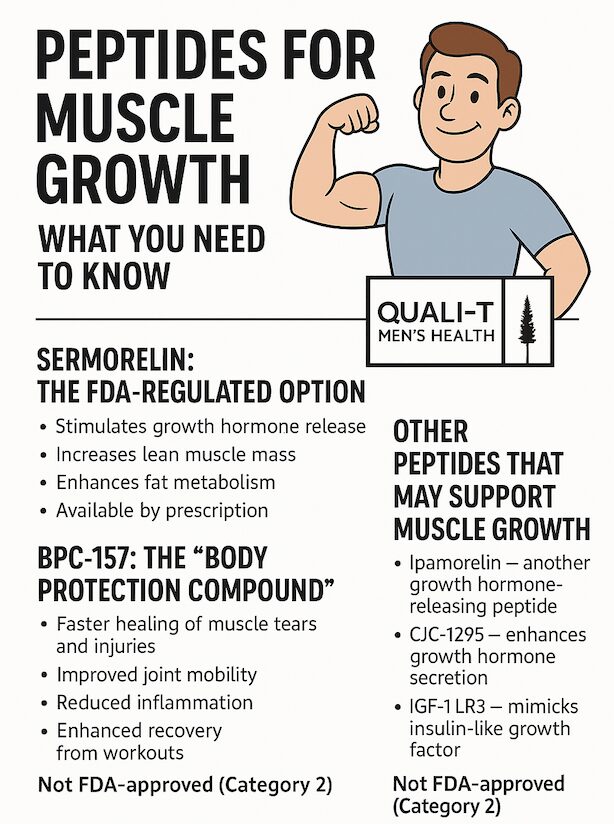
The efficiency of peptides copyrights on their capability to simulate the action of naturally taking place healthy proteins, leading to improved communication between cells. This interaction facilitates processes such as healthy protein synthesis and the launch of growth hormonal agents - buy Peptides for Building Muscle. Peptides can differ in series and size, each type serving distinctive features. Comprehending exactly how various peptides work allows professional athletes and fitness fanatics to explore their potential applications in support of their training objectives. Overall, peptides stand for a substantial location of passion in the domain of muscle mass growth and recuperation
Benefits of Peptides for Muscle Mass Growth
When considering the improvement of muscle mass development, peptides use numerous benefits that can significantly influence an individual's training outcomes. These brief chains of amino acids play an essential duty in advertising muscular tissue hypertrophy and recuperation. Peptides can stimulate the launch of growth hormone, which aids in muscle mass fixing and regeneration, inevitably causing enhanced muscular tissue mass.
Moreover, peptides improve healthy protein synthesis, enhancing the body's capability to construct and preserve muscle cells. They can likewise boost energy degrees, permitting much more intense exercises and better performance during training sessions. Furthermore, peptides may help in reducing recovery time by minimizing muscle mass pain and inflammation, which is especially helpful for major lifters who take part in rigorous training routines.
Popular Peptides Used by Athletes
Athletes significantly turn to specific peptides to enhance their performance and assistance muscle mass healing. Amongst one of the most prominent peptides used in sports are Development Hormonal agent Releasing Peptides (GHRPs), such as GHRP-6 and GHRP-2, which promote the body's all-natural development hormonal agent production. An additional extensively made use of peptide is Ipamorelin, understood for its capacity to advertise muscle growth while minimizing negative effects. In addition, CJC-1295, which works synergistically with GHRPs, has actually gained popularity for its long term effect on growth hormone launch.
Thymosin Beta-4 (TB-500) is favored for its role in tissue repair service and recovery, assisting athletes after extreme training sessions. In addition, BPC-157, recognized for its healing properties, is often consisted of in recovery methods. These peptides are demanded not only for their prospective to enhance muscular tissue mass yet additionally for their ability to improve general athletic performance and accelerate healing times.
Potential Dangers and Side Impacts
Numerous customers of performance-enhancing peptides may forget the possible risks and adverse effects related to their use. While these compounds can offer benefits in muscular tissue growth and recuperation, they can likewise bring about web substantial health complications. buy Peptides for Building Muscle. Usual side effects may include hormonal inequalities, which can interrupt natural testosterone production and cause infertility or state of mind swings. In addition, some users report experiencing fluid retention, joint pain, and boosted risk of infections Home Page at injection websites
Lasting use may lead to a lot more extreme repercussions, such as cardio problems, liver damage, or kidney dysfunction. Emotional effects like anxiousness and aggressiveness have actually additionally been kept in mind. The absence of law in the peptide market raises issues concerning pureness and dose, potentially leading to unforeseeable outcomes. It is necessary for people taking into consideration peptides to consider these dangers very carefully against the preferred benefits prior to waging their use.

Exactly How to Include Peptides Into Your Training Routine
Including peptides right into a training regimen can enhance muscular tissue growth and recovery when done attentively. Individuals need to consult a healthcare expert to establish suitable peptide kinds and dosages tailored to their details goals and health conditions. Common peptides for bodybuilding consist of Growth Hormonal agent Releasing Peptides (GHRPs) and Insulin-like Growth Variable 1 (IGF-1)
Next off, individuals should integrate peptides into their regular around workout times for peak efficiency. Administering peptides post-workout can advertise healing and muscle mass synthesis. Uniformity is essential; therefore, maintaining a normal timetable is crucial for taking full advantage of benefits.
Additionally, combining peptide usage with a balanced diet regimen abundant in healthy protein, together with an organized training program, will certainly yield the very best outcomes. Surveillance progress and readjusting dosages or sorts of peptides may be required based on individual actions. Eventually, a tactical approach will aid lifters harness the complete capacity of peptides in their training.
Frequently Asked Inquiries
Can Peptides Be Spotted in Drug Examinations for Professional Athletes?
Peptides can undoubtedly be found in drug tests for athletes. Numerous screening techniques are utilized to identify banned materials, including certain peptide sequences, making it important for professional athletes to be familiar with their usage and potential repercussions.
Are Peptides Lawful to Make Use Of in Competitive Sports?
Peptides are usually restricted in competitive sports by significant companies like the Globe Anti-Doping Agency. Athletes using peptides risk disqualification and prospective fines, highlighting the significance of sticking to laws governing performance-enhancing substances in their corresponding sports.
Just How Do Peptides Compare to Steroids for Muscular Tissue Development?
Peptides generally promote muscular tissue development with fewer he said side effects than steroids, which can trigger significant hormonal inequalities. However, steroids usually provide quicker results, while peptides may supply an extra steady and possibly safer method to muscular tissue improvement.
Can Peptides Be Used for Weight Loss too?
Peptides can without a doubt be utilized for fat loss. They might boost metabolism, advertise fat oxidation, and decrease cravings, making them a prospective device in weight administration methods when combined with proper diet and workout.
What Is the Recommended Dose for Muscle-Building Peptides?
The suggested dosage for muscle-building peptides varies, commonly ranging from 1 to 3 milligrams per day, depending on the specific peptide and specific goals. Consulting a healthcare expert is advised for individualized advice and security.
Peptides have arised as an important component for serious lifters intending to improve muscle development and healing. Peptides, commonly referred to as the building blocks of proteins, are short chains of amino acids linked by peptide bonds. Among the most prominent peptides made use of in sports are Growth Hormonal agent Launching Peptides (GHRPs), such as GHRP-6 and GHRP-2, which stimulate the body's all-natural development hormonal agent production. Including peptides into a training regimen can boost muscle mass development and recovery when done thoughtfully. The suggested dose for muscle-building peptides differs, normally varying from 1 to 3 milligrams per day, depending on the specific peptide and individual objectives.